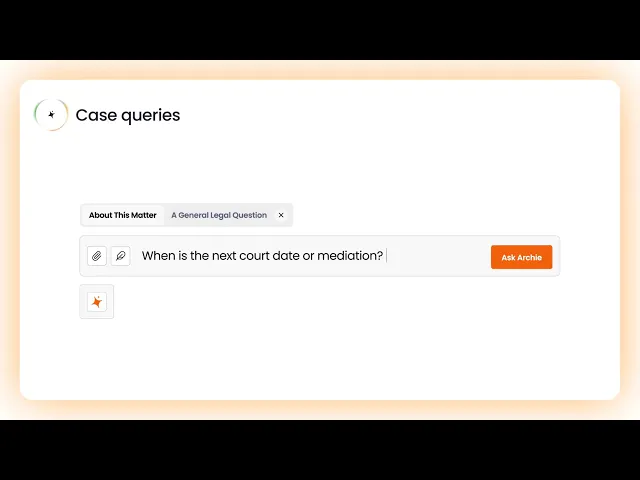
AIUX for an AI Legal Assistant
Smokeball
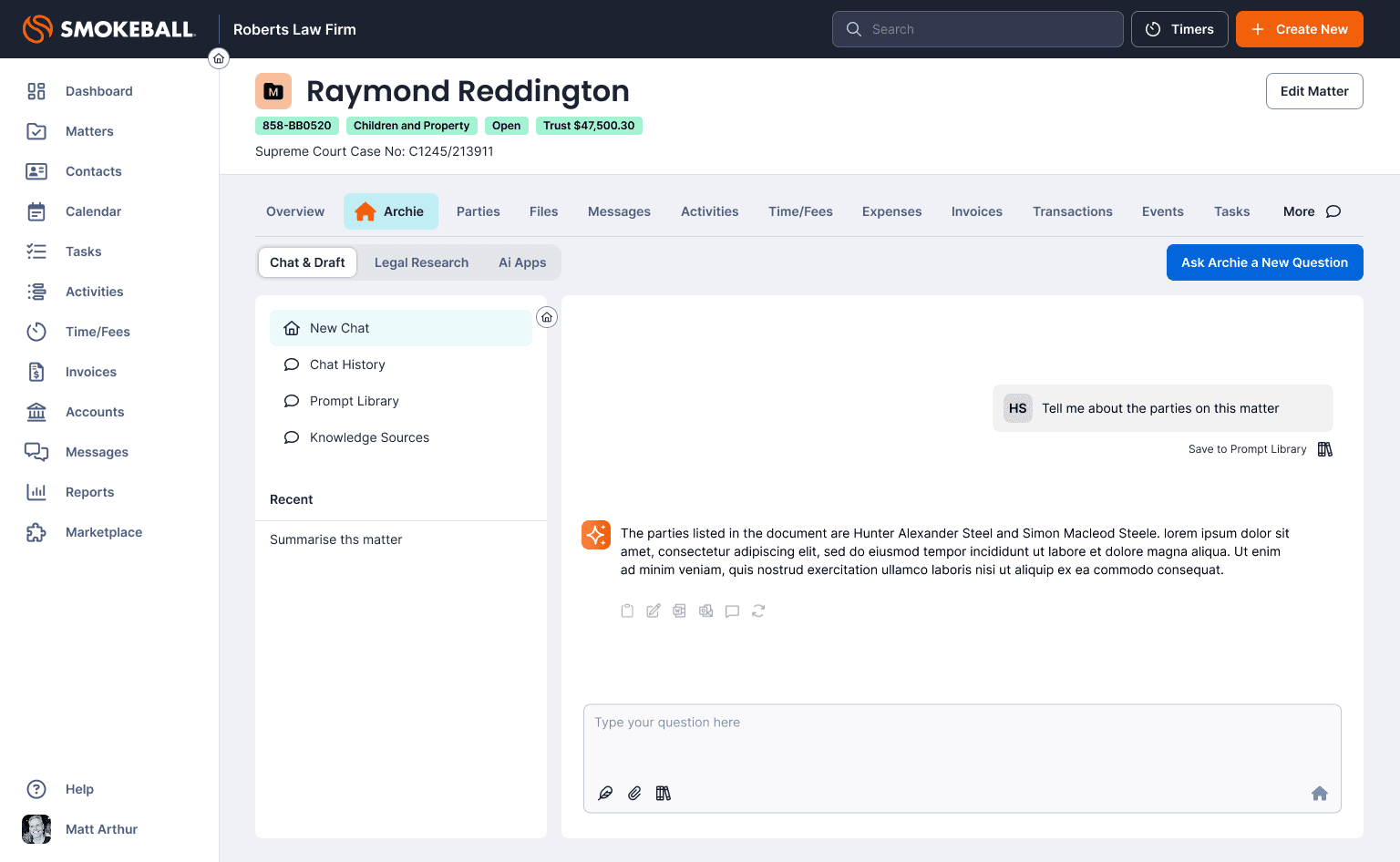
Led AIUX for Smokeball’s ‘Archie’, introducing a context-aware conversational AI assistant within matters that uses case data and documents to generate summaries, answer queries, and assist with document drafting and review.
Problem
Generative AI exploded onto the market almost overnight. Adoption of AI tools by legal firms in the US increased from 19% in 2023 (Clio, 2023-2024) to 79% and Australian market research indicated adoption levels to be closer to 81% (SB SoL AU 2025) with firms reporting efficiency gains of up to 3x for common daily tasks for routine legal tasks such as document review, review, contract analysis & legal research.
2024 saw a record $2.5B+ in total legal tech funding globally —double that of 2023. By early 2025 nearly $1B had been invested in legal tech startups with projected growth expected to be 13.1% CAGR through 2034.
Smokeball needed to determine how AI could genuinely improve customer productivity without becoming another gimmicky chatbot. The challenge was balancing innovation with the trust, accuracy and the workflow requirements of customers.
Key Challenges
While advances in AI were creating opportunities to improve productivity, there was no clear model for how AI should integrate into Smokeball's existing legal workflows ways that felt intuitive, trustworthy, and genuinely useful.
Smokeball needed to design an AI experience that reduced the cost of low-value work without adding complexity—particularly for solo and small-firm users.
Making AI capabilities clear for lawyers unfamiliar with AI.
Guiding users toward effective prompts and intents.
Building trust through transparency and user control.
Balancing powerful AI capability with simplicity
Strategy
Instead of beginning with technology, we began with users. My team worked closely with customers to understand what daily tasks AI could be leveraged to make easier for them to complete.
One of the things we had to decide on was, given our not so tech savvy users, do we attempt to build entirely new workflows and features that use AI to replace existing interactions or evolve existing workflows to include AI powered options while keeping changes to familiar interfaces minimal. The first option would require users learn how to use new features from scratch. This would potentially cause frustration as users grapple with new ways of working and likely mean training and support. The latter posed less of this risk.
We then adopted a 'make-to-learn' approach to collaborated closely with engineering and AI specialists to rapidly prototype AI-assisted workflows and validate them with users and refine, develop and launch them.
What We Shipped
First release included the following capabilities:
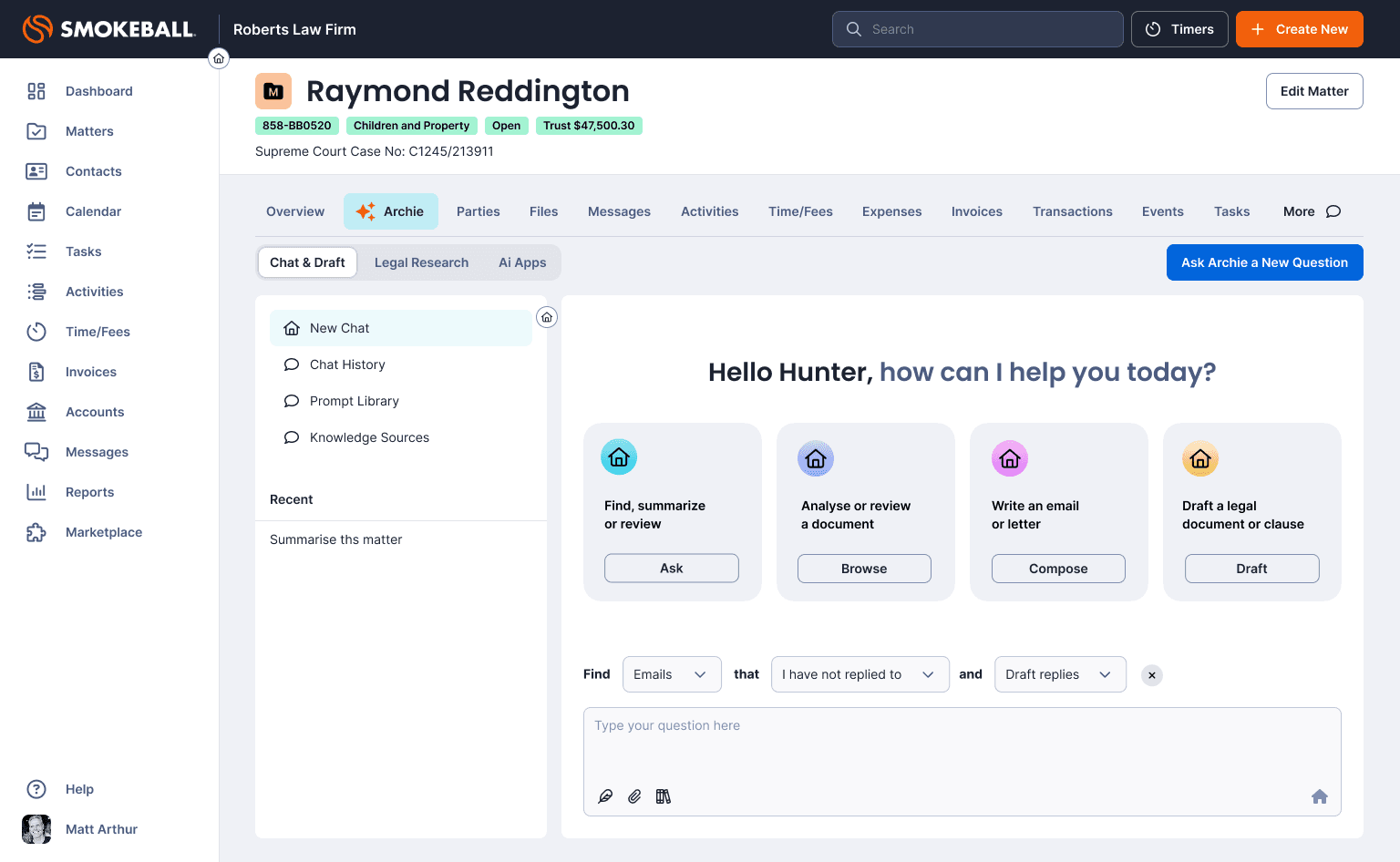
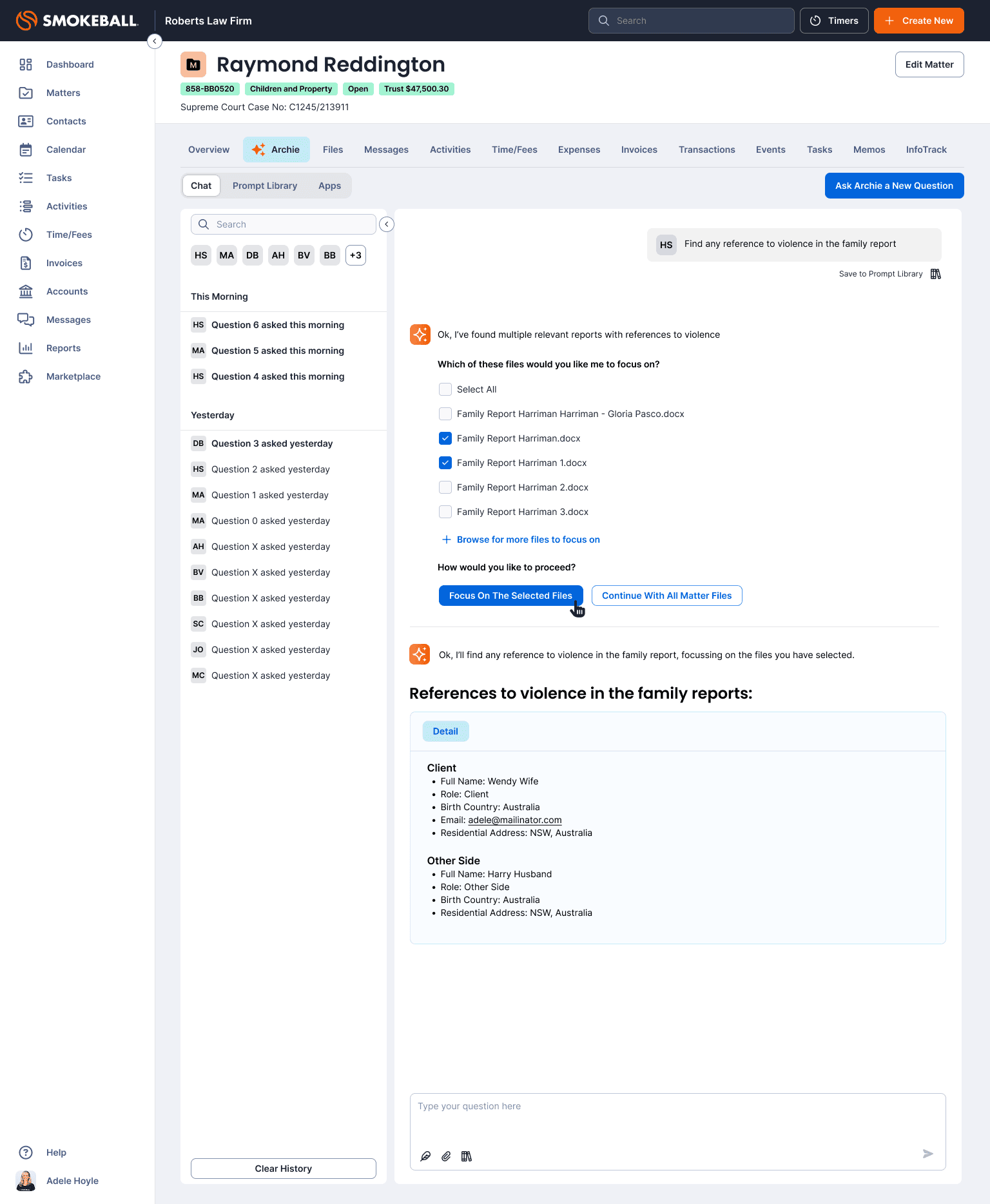
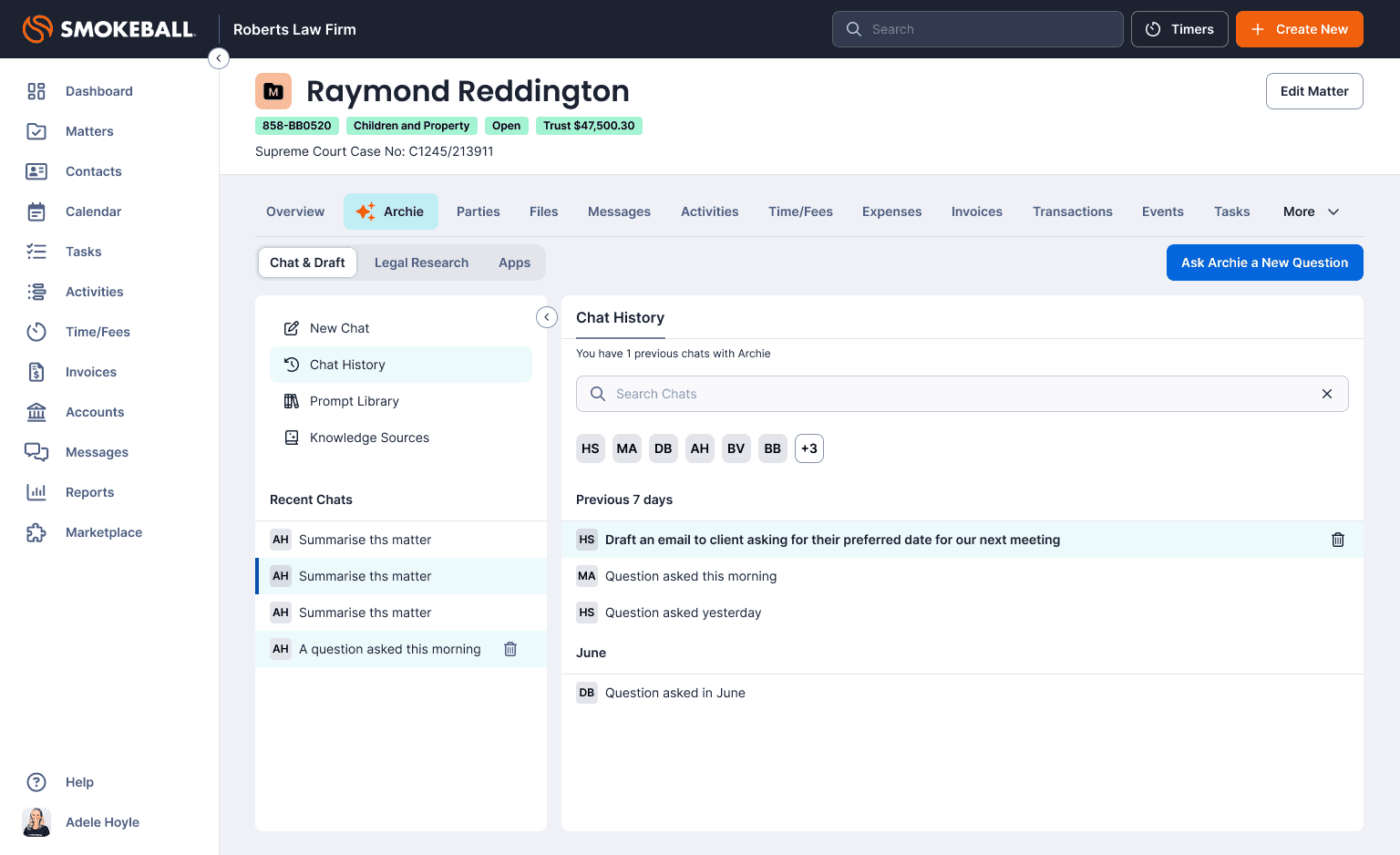
Conversational UI with prompt suggestions for matter-specific Q&A
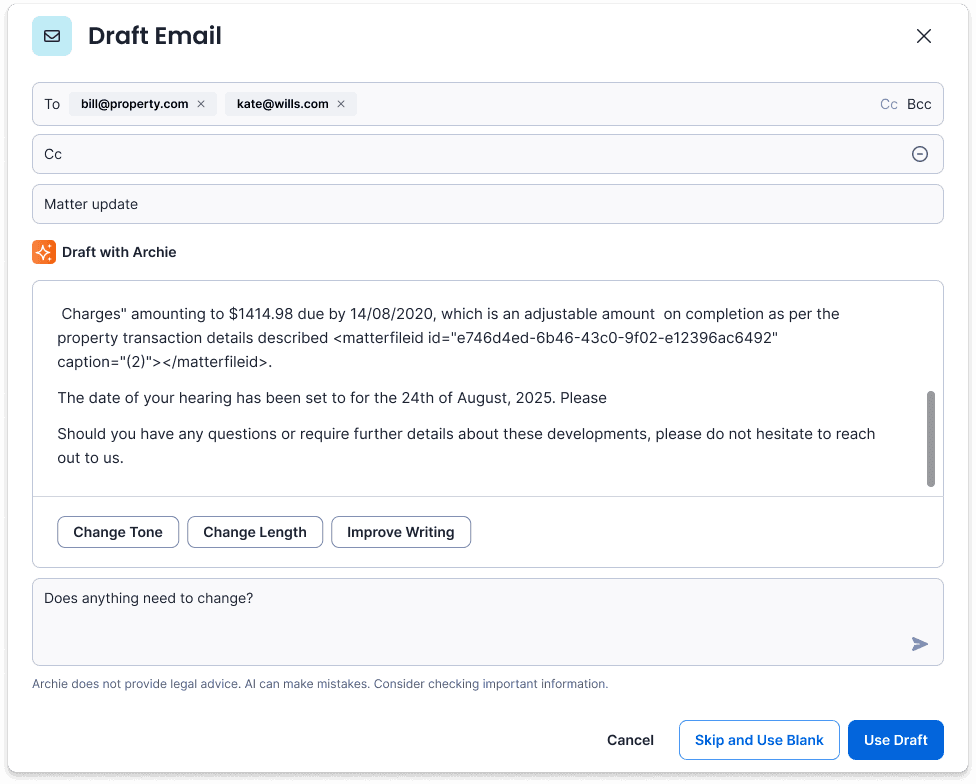
AI-assisted drafting (emails, documents, tasks)
Summarisation and insight extraction
Context-aware structured guidance within workflows to afford use control and reduce complexity
The following additional features were fast-follows based on user feedback and market research to enhance productivity and drive adoption and scale.
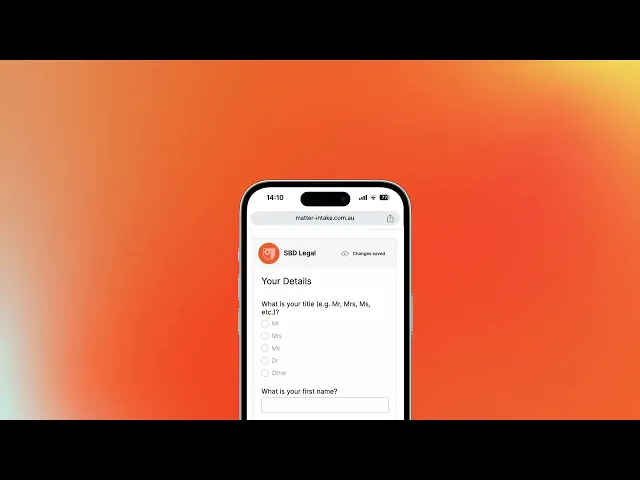
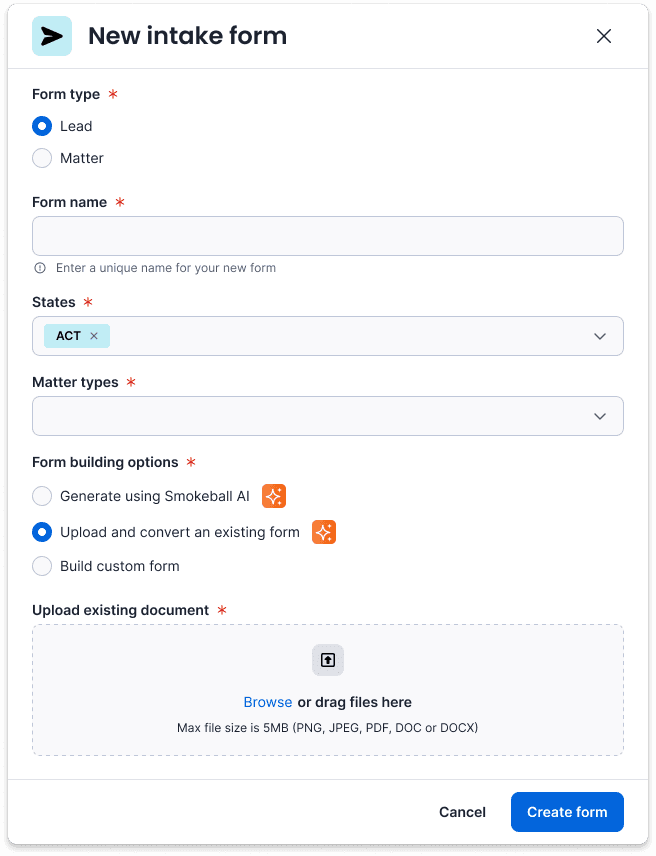
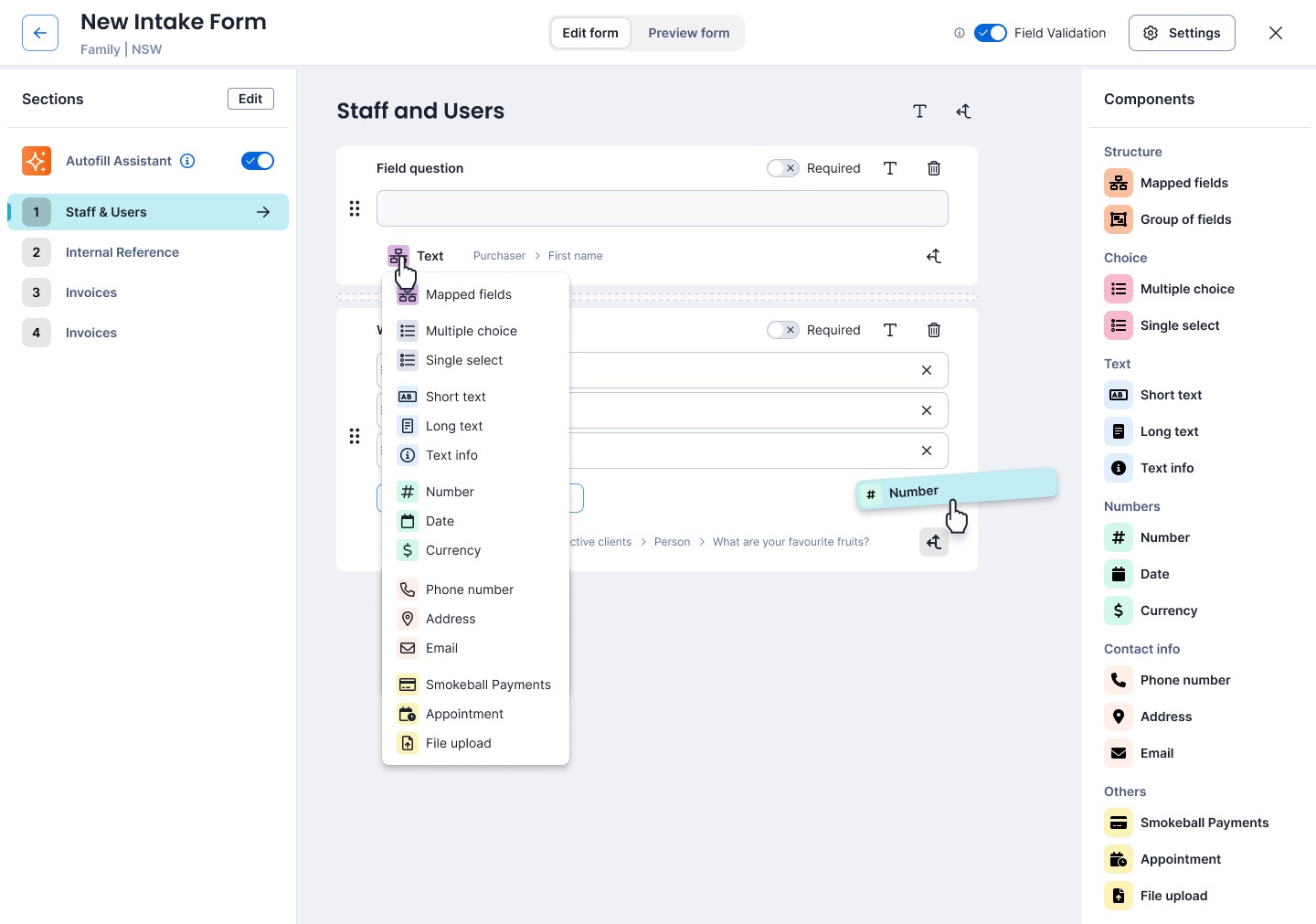
A supercharged Intake Form Builder to allow Smokeball AI to generate editable forms from uploaded documents and introduced supporting systems including the following;
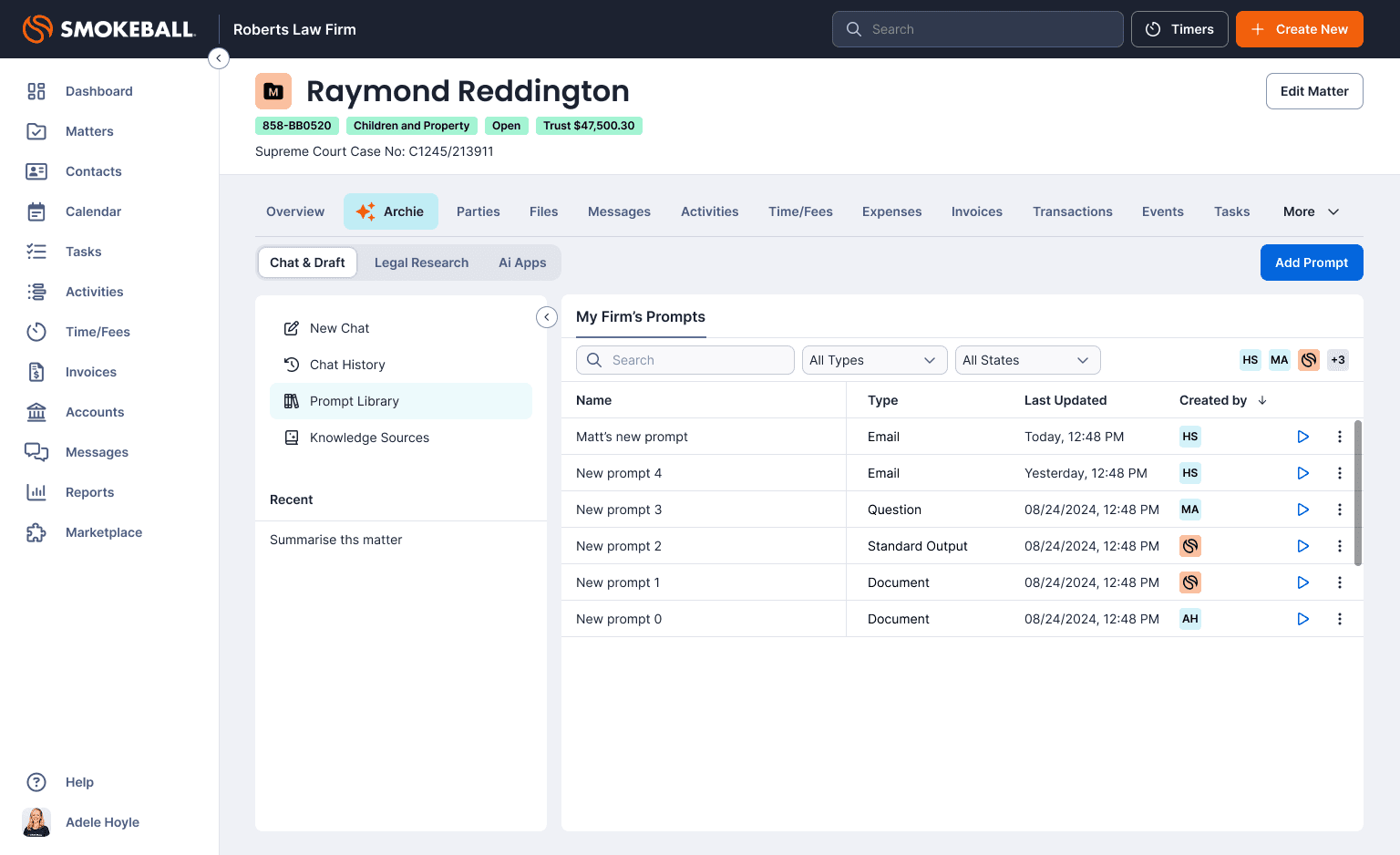
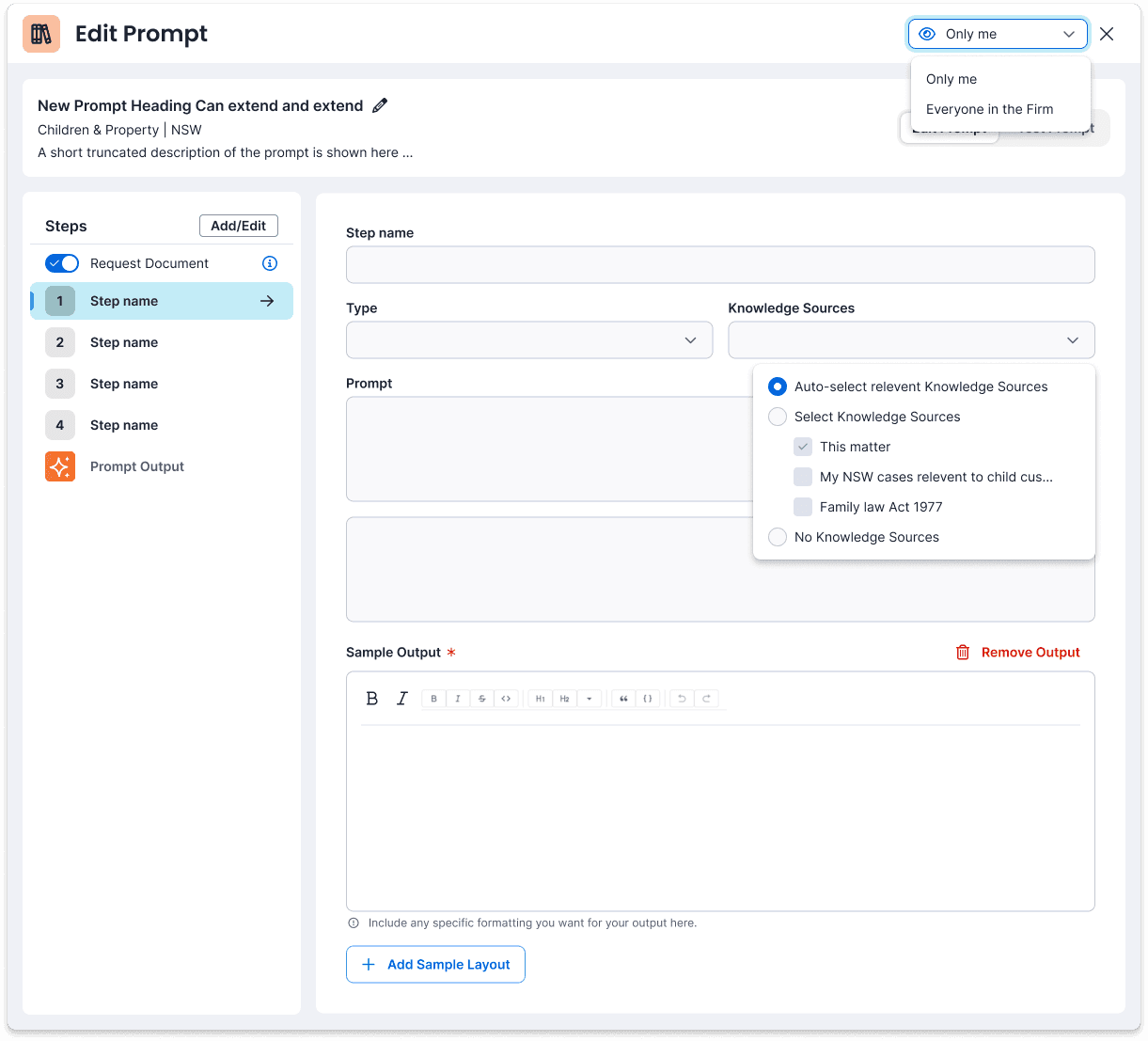
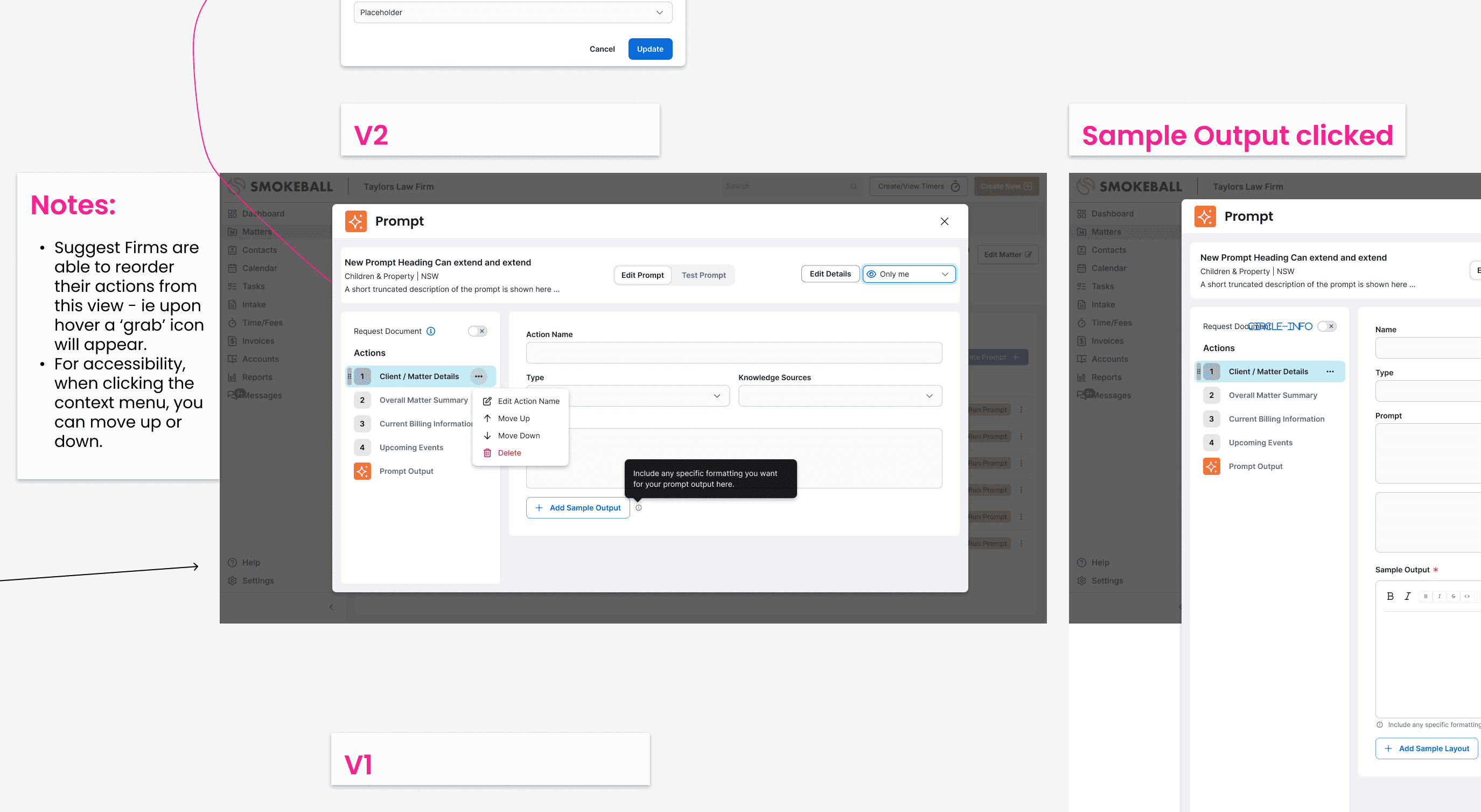
A Prompt Library feature to allow users to save and contextually access commonly used prompts and create multi-stepped prompts in an agentic-like framework
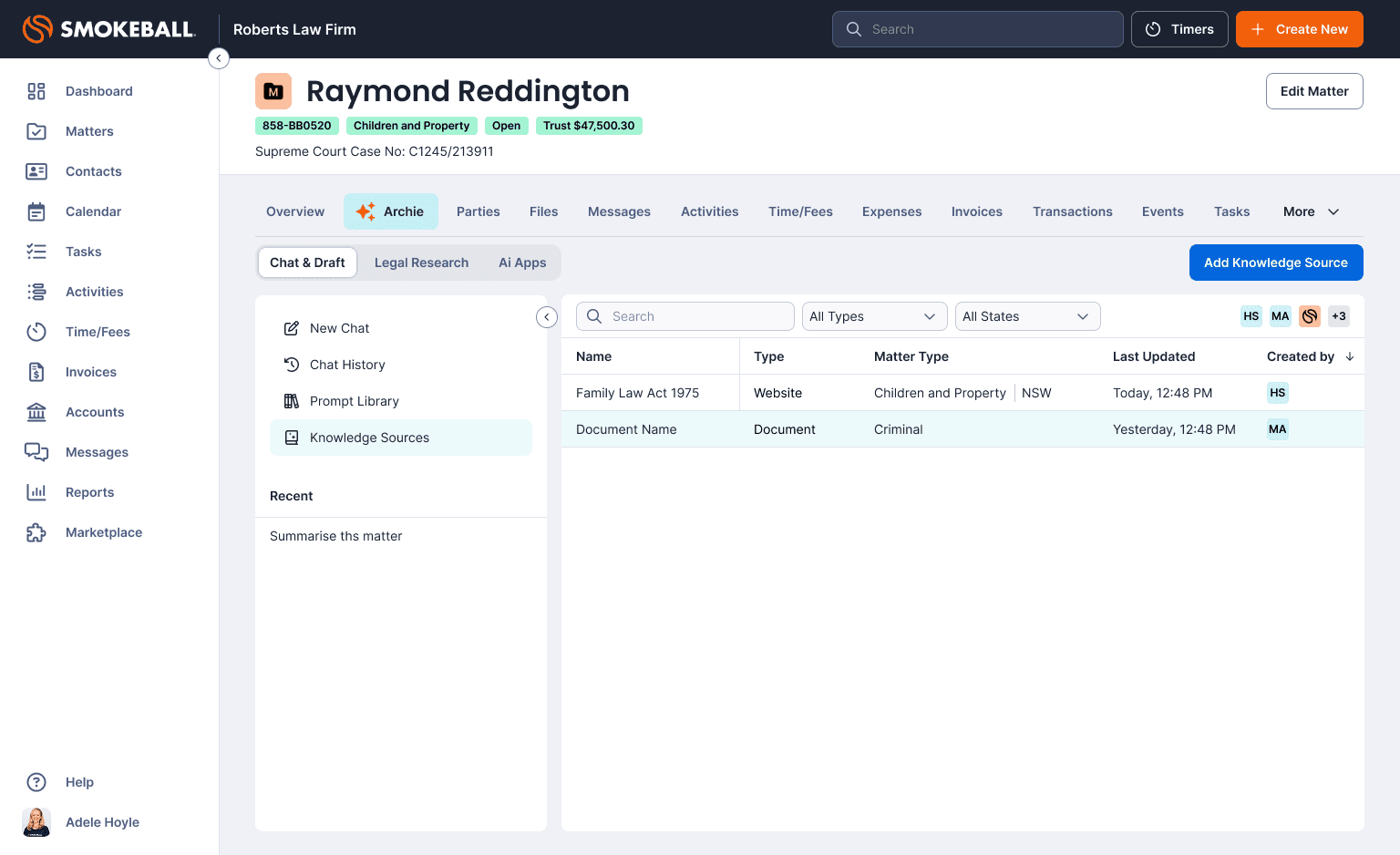
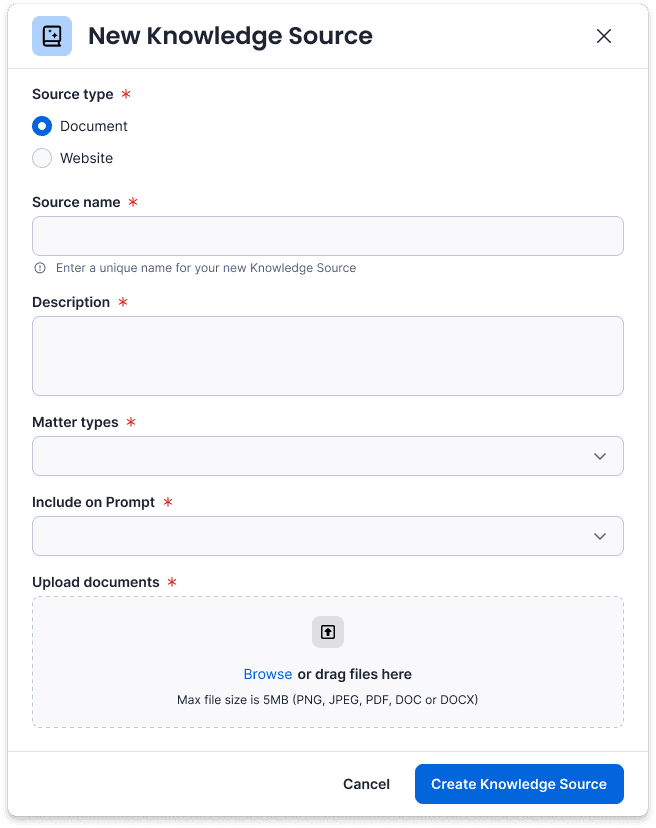
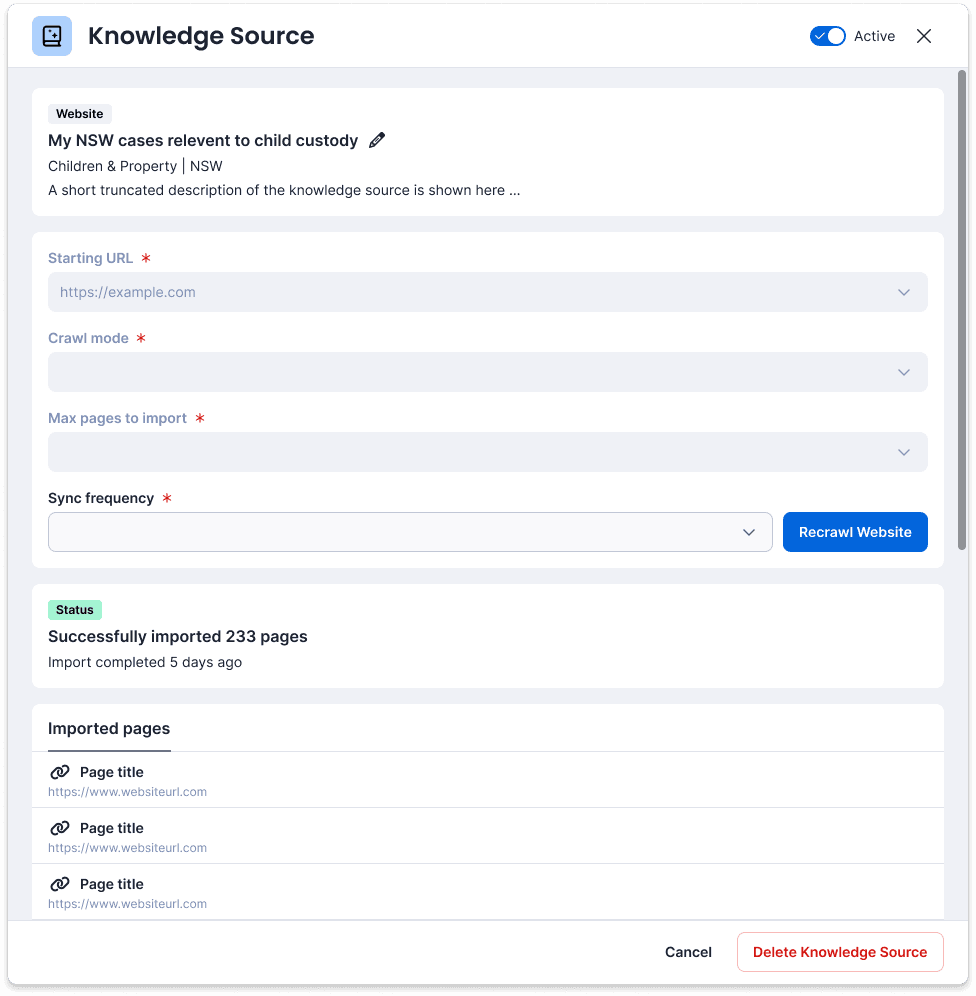
A Knowledge Source tool that allows users to specify the sources of data they wish to interrogate on a question by question basis
AI Apps Marketplace to allow partners to commercialise Agents that enhance Archie's core capabilities
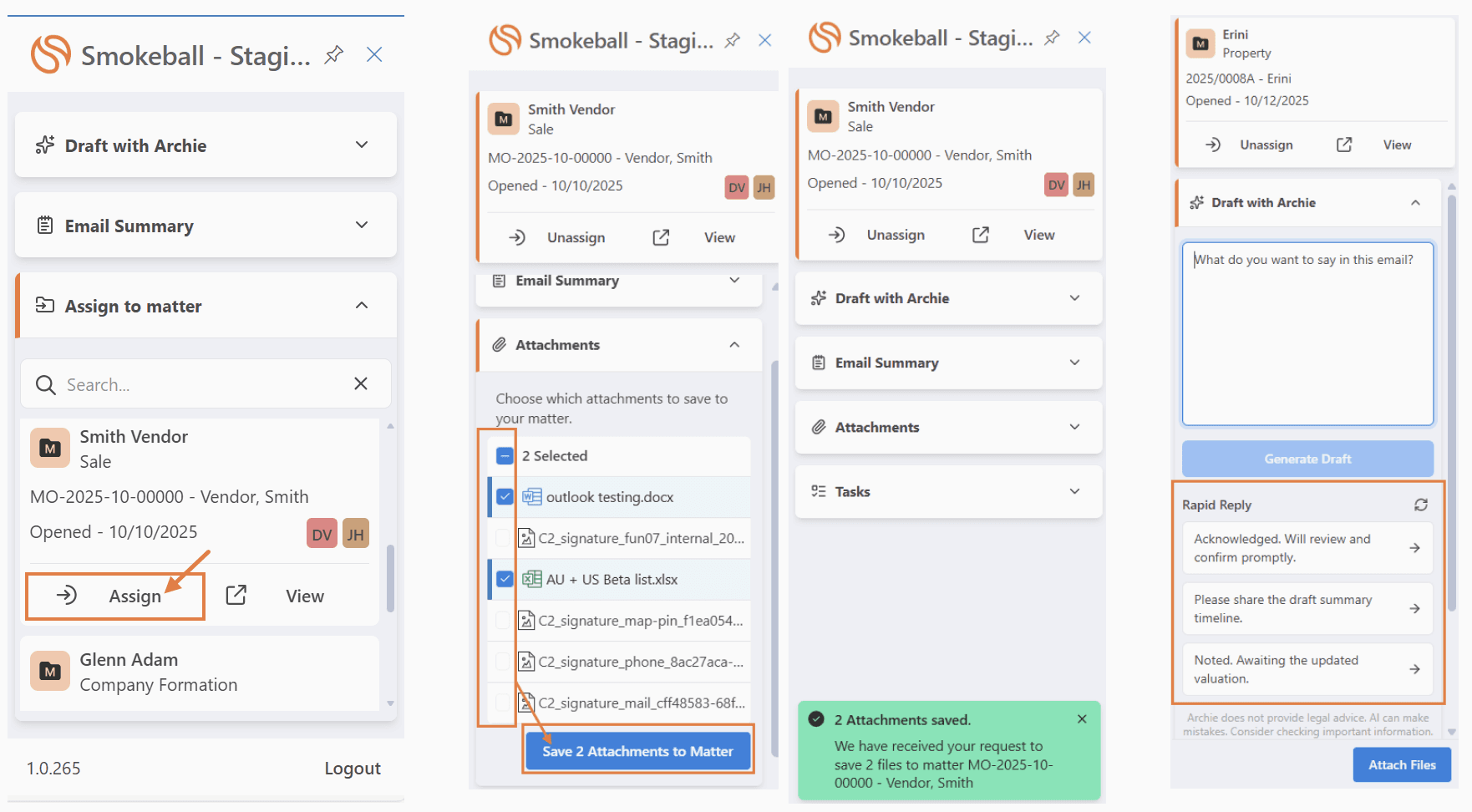
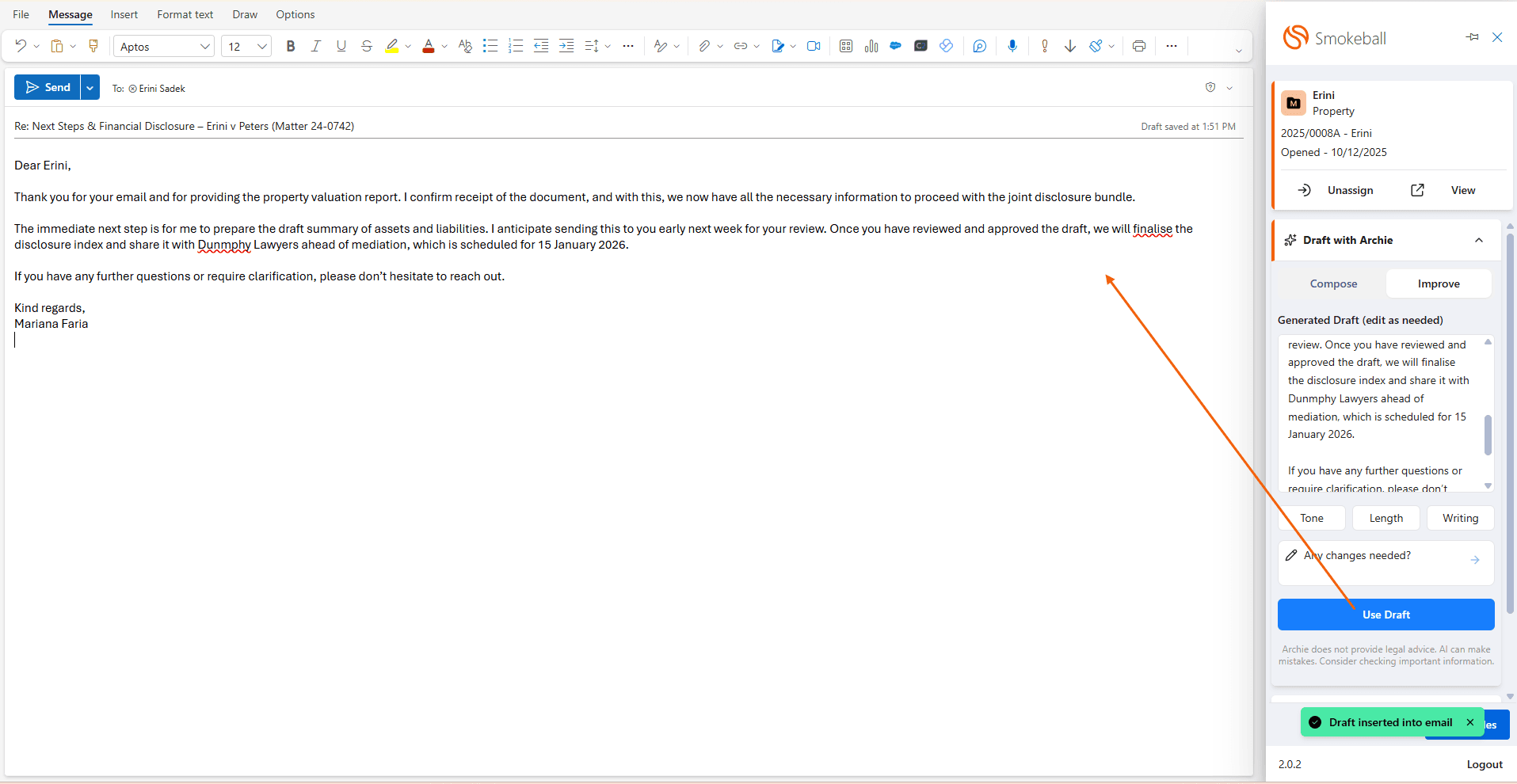
New Microsoft Outlook Archie add-in that syncs emails and attachments to Smokeball matters, summarises threads, suggests response and actions such as Task & Events all within the Outlook Add-in.
My Role
Owned | Led | Contributed to |
|---|---|---|
End-to-end product and experience design for Archie, including core interaction patterns (conversational interface, AI-assisted drafting, and human-in-the-loop workflows) and integration into Smokeball’s product experience. | Hands-on design execution across key features, while driving cross-functional alignment with Product, Engineering, and Marketing to shape priorities, refine use cases, and ensure a cohesive AI experience. | AI product strategy, and the evolution of best practices for designing usable and trustworthy AI-powered experiences. |
Outcomes
In just three months, we launched a fully embedded AI Research Assistant and successfully positioned the company as a sector leader in AI-powered productivity software.
Archie AI established a foundation for scalable AI experience design, positioning Smokeball to evolve its product around intelligent, workflow-driven automation.
Archie adopted by 3,000+ law firms and used by 10,000+ lawyers
~25,000 prompts per week
Up to 80% reduction in email drafting time
The AI Intake Form Builder significantly streamlined client onboarding reducing administrative time by up to 3 hours per day. Studies showed potential to boost billable hours by up to 30%.
Archie within a matter showing prompt suggestions
Conversational UI
Structured responses providing greater user control
Problem
Generative AI exploded onto the market almost overnight. Adoption of AI tools by legal firms in the US increased from 19% in 2023 (Clio, 2023-2024) to 79% and Australian market research indicated adoption levels to be closer to 81% (SB SoL AU 2025) with firms reporting efficiency gains of up to 3x for common daily tasks for routine legal tasks such as document review, review, contract analysis & legal research.
2024 saw a record $2.5B+ in total legal tech funding globally —double that of 2023. By early 2025 nearly $1B had been invested in legal tech startups with projected growth expected to be 13.1% CAGR through 2034.
Smokeball needed to determine how AI could genuinely improve customer productivity without becoming another gimmicky chatbot. The challenge was balancing innovation with the trust, accuracy and the workflow requirements of customers.
Key Challenges
While advances in AI were creating opportunities to improve productivity, there was no clear model for how AI should integrate into Smokeball's existing legal workflows ways that felt intuitive, trustworthy, and genuinely useful.
Smokeball needed to design an AI experience that reduced the cost of low-value work without adding complexity—particularly for solo and small-firm users.
Making AI capabilities clear for lawyers unfamiliar with AI.
Guiding users toward effective prompts and intents.
Building trust through transparency and user control.
Balancing powerful AI capability with simplicity
Strategy
Instead of beginning with technology, we began with users. My team worked closely with customers to understand what daily tasks AI could be leveraged to make easier for them to complete.
One of the things we had to decide on was, given our not so tech savvy users, do we attempt to build entirely new workflows and features that use AI to replace existing interactions or evolve existing workflows to include AI powered options while keeping changes to familiar interfaces minimal. The first option would require users learn how to use new features from scratch. This would potentially cause frustration as users grapple with new ways of working and likely mean training and support. The latter posed less of this risk.
We then adopted a 'make-to-learn' approach to collaborated closely with engineering and AI specialists to rapidly prototype AI-assisted workflows and validate them with users and refine, develop and launch them.
What We Shipped
First release included the following capabilities:
Conversational UI with prompt suggestions for matter-specific Q&A
AI-assisted drafting (emails, documents, tasks)
Summarisation and insight extraction
Context-aware structured guidance within workflows to afford use control and reduce complexity
The following additional features were fast-follows based on user feedback and market research to enhance productivity and drive adoption and scale.
A supercharged Intake Form Builder to allow Smokeball AI to generate editable forms from uploaded documents and introduced supporting systems including the following;
A Prompt Library feature to allow users to save and contextually access commonly used prompts and create multi-stepped prompts in an agentic-like framework
A Knowledge Source tool that allows users to specify the sources of data they wish to interrogate on a question by question basis
AI Apps Marketplace to allow partners to commercialise Agents that enhance Archie's core capabilities
New Microsoft Outlook Archie add-in that syncs emails and attachments to Smokeball matters, summarises threads, suggests response and actions such as Task & Events all within the Outlook Add-in.
My Role
Owned | Led | Contributed to |
|---|---|---|
End-to-end product and experience design for Archie, including core interaction patterns (conversational interface, AI-assisted drafting, and human-in-the-loop workflows) and integration into Smokeball’s product experience. | Hands-on design execution across key features, while driving cross-functional alignment with Product, Engineering, and Marketing to shape priorities, refine use cases, and ensure a cohesive AI experience. | AI product strategy, and the evolution of best practices for designing usable and trustworthy AI-powered experiences. |
Outcomes
In just three months, we launched a fully embedded AI Research Assistant and successfully positioned the company as a sector leader in AI-powered productivity software.
Archie AI established a foundation for scalable AI experience design, positioning Smokeball to evolve its product around intelligent, workflow-driven automation.
Archie adopted by 3,000+ law firms and used by 10,000+ lawyers
~25,000 prompts per week
Up to 80% reduction in email drafting time
The AI Intake Form Builder significantly streamlined client onboarding reducing administrative time by up to 3 hours per day. Studies showed potential to boost billable hours by up to 30%.
Archie within a matter showing prompt suggestions
Conversational UI
Structured responses providing greater user control
Problem
Generative AI exploded onto the market almost overnight. Adoption of AI tools by legal firms in the US increased from 19% in 2023 (Clio, 2023-2024) to 79% and Australian market research indicated adoption levels to be closer to 81% (SB SoL AU 2025) with firms reporting efficiency gains of up to 3x for common daily tasks for routine legal tasks such as document review, review, contract analysis & legal research.
2024 saw a record $2.5B+ in total legal tech funding globally —double that of 2023. By early 2025 nearly $1B had been invested in legal tech startups with projected growth expected to be 13.1% CAGR through 2034.
Smokeball needed to determine how AI could genuinely improve customer productivity without becoming another gimmicky chatbot. The challenge was balancing innovation with the trust, accuracy and the workflow requirements of customers.
Key Challenges
While advances in AI were creating opportunities to improve productivity, there was no clear model for how AI should integrate into Smokeball's existing legal workflows ways that felt intuitive, trustworthy, and genuinely useful.
Smokeball needed to design an AI experience that reduced the cost of low-value work without adding complexity—particularly for solo and small-firm users.
Making AI capabilities clear for lawyers unfamiliar with AI.
Guiding users toward effective prompts and intents.
Building trust through transparency and user control.
Balancing powerful AI capability with simplicity
Strategy
Instead of beginning with technology, we began with users. My team worked closely with customers to understand what daily tasks AI could be leveraged to make easier for them to complete.
One of the things we had to decide on was, given our not so tech savvy users, do we attempt to build entirely new workflows and features that use AI to replace existing interactions or evolve existing workflows to include AI powered options while keeping changes to familiar interfaces minimal. The first option would require users learn how to use new features from scratch. This would potentially cause frustration as users grapple with new ways of working and likely mean training and support. The latter posed less of this risk.
We then adopted a 'make-to-learn' approach to collaborated closely with engineering and AI specialists to rapidly prototype AI-assisted workflows and validate them with users and refine, develop and launch them.
What We Shipped
First release included the following capabilities:
Conversational UI with prompt suggestions for matter-specific Q&A
AI-assisted drafting (emails, documents, tasks)
Summarisation and insight extraction
Context-aware structured guidance within workflows to afford use control and reduce complexity
The following additional features were fast-follows based on user feedback and market research to enhance productivity and drive adoption and scale.
A supercharged Intake Form Builder to allow Smokeball AI to generate editable forms from uploaded documents and introduced supporting systems including the following;
A Prompt Library feature to allow users to save and contextually access commonly used prompts and create multi-stepped prompts in an agentic-like framework
A Knowledge Source tool that allows users to specify the sources of data they wish to interrogate on a question by question basis
AI Apps Marketplace to allow partners to commercialise Agents that enhance Archie's core capabilities
New Microsoft Outlook Archie add-in that syncs emails and attachments to Smokeball matters, summarises threads, suggests response and actions such as Task & Events all within the Outlook Add-in.
My Role
Owned | Led | Contributed to |
|---|---|---|
End-to-end product and experience design for Archie, including core interaction patterns (conversational interface, AI-assisted drafting, and human-in-the-loop workflows) and integration into Smokeball’s product experience. | Hands-on design execution across key features, while driving cross-functional alignment with Product, Engineering, and Marketing to shape priorities, refine use cases, and ensure a cohesive AI experience. | AI product strategy, and the evolution of best practices for designing usable and trustworthy AI-powered experiences. |
Outcomes
In just three months, we launched a fully embedded AI Research Assistant and successfully positioned the company as a sector leader in AI-powered productivity software.
Archie AI established a foundation for scalable AI experience design, positioning Smokeball to evolve its product around intelligent, workflow-driven automation.
Archie adopted by 3,000+ law firms and used by 10,000+ lawyers
~25,000 prompts per week
Up to 80% reduction in email drafting time
The AI Intake Form Builder significantly streamlined client onboarding reducing administrative time by up to 3 hours per day. Studies showed potential to boost billable hours by up to 30%.
Archie within a matter showing prompt suggestions
Conversational UI
Structured responses providing greater user control
Led AIUX for Smokeball’s ‘Archie’, introducing a context-aware conversational AI assistant within matters that uses case data and documents to generate summaries, answer queries, and assist with document drafting and review.
AIUX for an AI Legal Assistant
Smokeball